

Mangroves are vital coastal sentinels, providing shoreline protection, carbon storage, and fisheries support. However, their dense root systems efficiently trap plastic debris from rivers, tides, and currents. This accumulation smothers sediments, increases seedling mortality, and disrupts gas and water exchange.
The threat is worsened by Persistent Organic Pollutants (POPs), including pesticides, industrial chemicals, and other long-lived compounds, which accumulate in plants and wildlife. These substances bioaccumulate and move up the food chain, risking ecosystem stability and human health. Yet mangroves remain understudied regarding plastic pollution, leaving conservation and restoration efforts fragmented, especially when seedlings become tangled in debris.
To address these pressing challenges, a new scoping study, “Plastic Pollution in Mangrove Ecosystems: Impacts, Mitigation and Policy Responses” has been launched to assess plastic and POP pollution across four major mangrove regions. The study will evaluate ecological and socioeconomic impacts, map governance and policy frameworks, identify knowledge gaps, and design pilot projects to support mitigation and restoration efforts. This research will help inform coordinated, science-based responses across international frameworks, including the Ramsar Convention on Wetlands and the Basel Convention on Hazardous Wastes.
The International Mangrove Center (IMC) is actively contributing to this study as a member of its Advisory Group, bringing specialized expertise in mangrove ecosystems to ensure that assessments, mitigation strategies, and policy recommendations are grounded in ecological realities. IMC representatives participated in the inception report meeting on 8 April 2026, helping shape the study's objectives and methodological approach. IMC specifically emphasized the importance of strengthening synergies among international conventions and deepening stakeholder engagement at all levels.
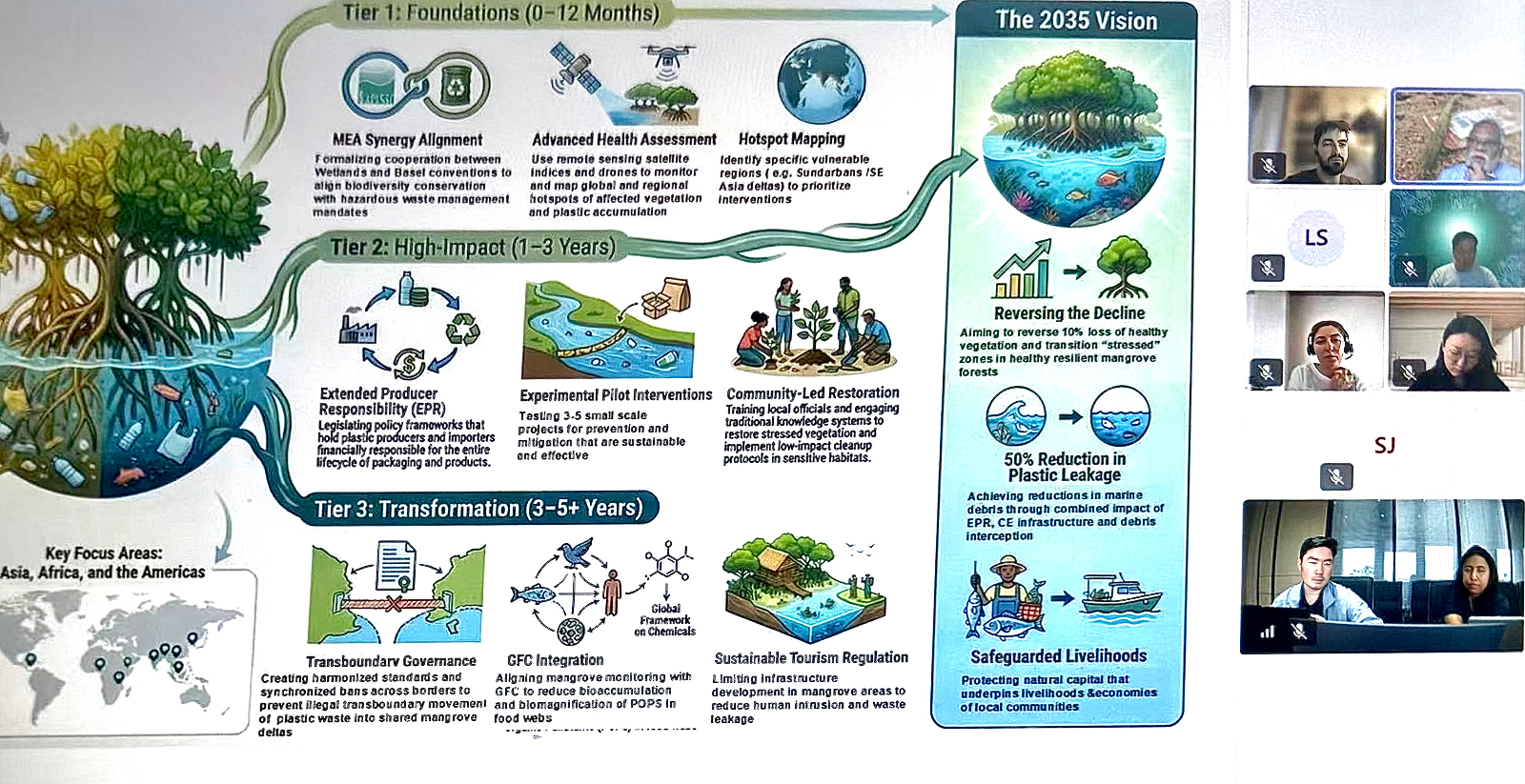
IMC representatives at the inception report meeting
This work will align global efforts to protect mangroves, their biodiversity, and the communities that depend on them.