

On 28 January 2026, the IMC hosted a new session of the International Mangrove Wetland Lecture Series. Mr. Li Donglin, former Country Director of the International Labour Organization (ILO) and an expert on global governance, was invited to deliver a keynote lecture. Based on his extensive experience in international organizations, he shared insights and practical perspectives on the growing demand for internationally competent professionals and approaches to their systematic development in the context of global governance.
Representatives from the National Forestry and Grassland Administration, the China Wetlands Association, the Urban Planning and Natural Resources Bureau of Shenzhen Municipality, the Guangdong Neilingding Futian National Nature Reserve Administration Bureau, the Mangrove Conservation Foundation, and the IMC Interim Secretariat participated in the lecture and discussion.
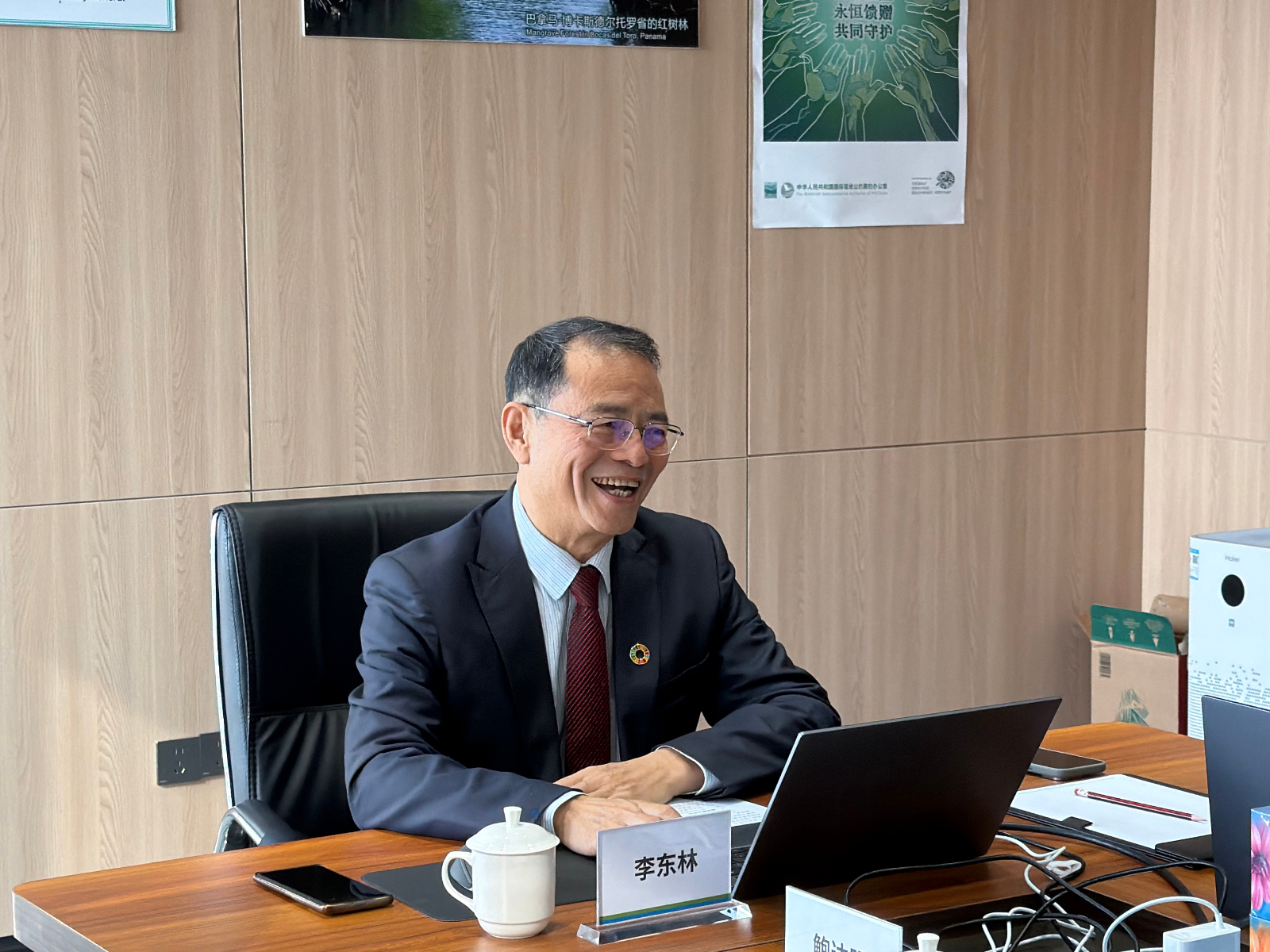
During the lecture, Mr. Li highlighted the growing importance of multilateral cooperation and global governance as global challenges become increasingly complex. He noted that active engagement in global governance is essential for addressing transboundary issues, including climate change and biodiversity loss, as well as for advancing the implementation of the United Nations 2030 Agenda for Sustainable Development.
Referring to global environmental issues including mangrove conservation, Mr. Li emphasized the urgent need for professionals who combine strong technical expertise with a solid understanding of international rules and the ability to work effectively across cultures. With more than two decades of experience within the United Nations system, he also stressed that the development of international talent requires coordinated efforts across education systems, practical experience, and international platforms. He encouraged young professionals to gain hands-on exposure to international affairs through internships with international organizations and participation in global volunteer programs.
Participants noted that the lecture Broadened their understanding of global governance and international talent development. They also recognized that advancing global ecological conservation efforts, such as mangrove protection requires not only strong scientific and technical support but also a highly skilled workforce equipped with international perspectives and collaborative capabilities.