
On 2 February 2026, marking the 30th anniversary of World Wetlands Day, Guangdong Province launched its World Wetlands Day 2026 and Wetland Conservation Awareness Week activities in Shenzhen, China. Under the theme "Wetlands and traditional knowledge: Celebrating cultural heritage.", the event highlighted innovative practices in mangrove conservation, restoration and the transformation of ecological values, while further strengthening public awareness and collective action to cherish wetlands and safeguard mangroves.
The event was jointly hosted by the Forestry Administration of Guangdong Province and the International Mangrove Center (IMC), and organized by the Urban Planning and Natural Resources Bureau of Shenzhen Municipality (Forestry Bureau of Shenzhen Municipality) and the Ocean Development Bureau of Shenzhen Municipality. Representatives from the Department of Wetland Management of the China’s National Forestry and Grassland Administration, the Interim Secretariat of the IMC, the Forestry Administration of Guangdong Province, and the Urban Planning and Natural Resources Bureau of Shenzhen Municipality (Forestry Bureau of Shenzhen Municipality) delivered remarks.
Speakers shared the view that Guangdong Province and Shenzhen City have achieved notable progress in wetland and mangrove conservation. They emphasized the importance of inheriting and advancing traditional wetland knowledge rooted in the concept of harmonious coexistence between people and water, strengthening mangrove conservation and restoration efforts as well as the implementation of international commitments, supporting the high-standard development and operation of the IMC and promoting synergies between wetland conservation and high-quality urban development.
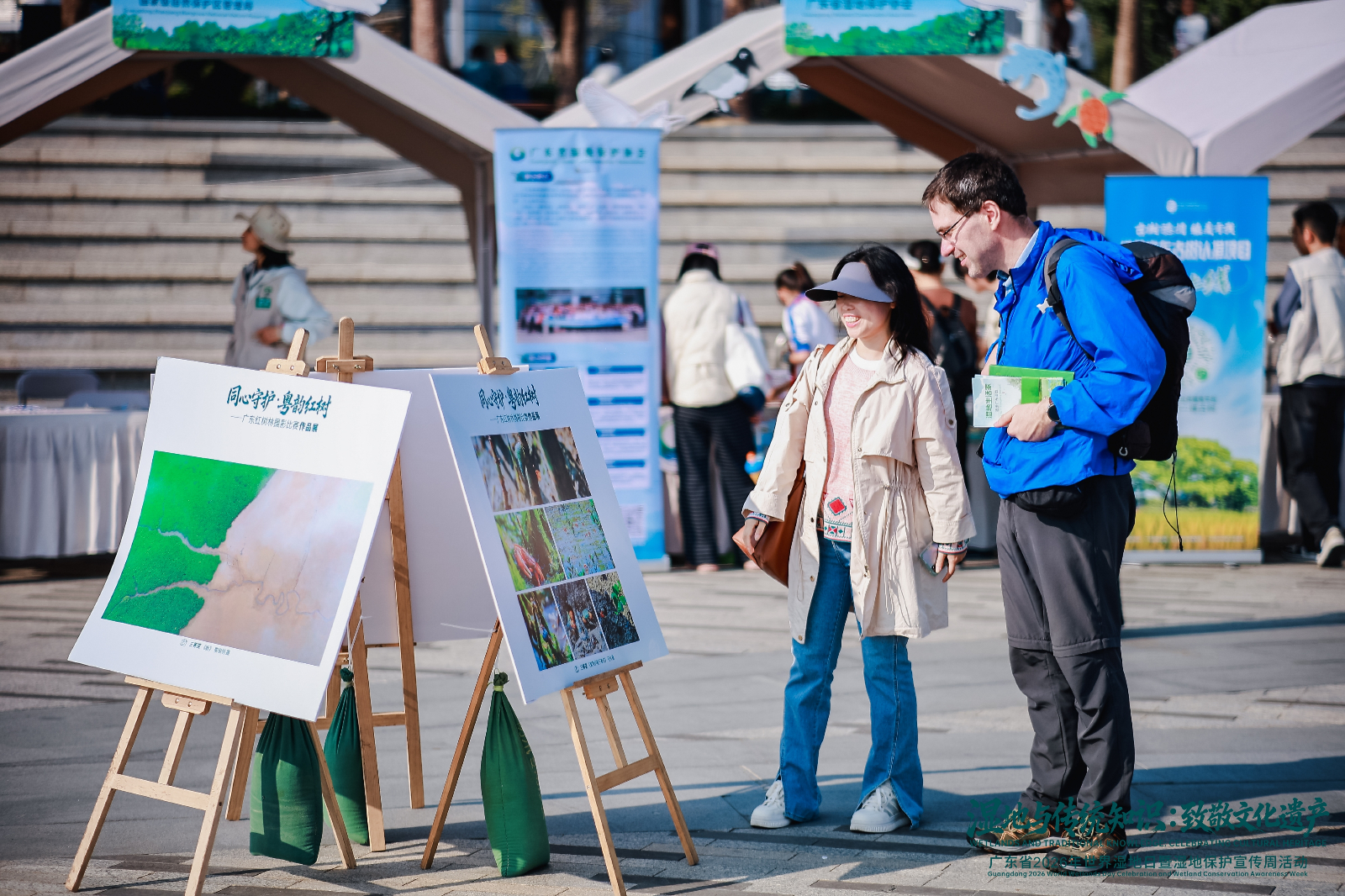
The event featured a series of highlights. Awards were presented to winners of the Guangdong Mangrove Photography Competition themed “Together for Mangroves: Lingnan Rhythms.” Guangdong Province also officially released a set of representative cases on mangrove conservation, restoration and ecosystem value realization. In addition, eight “Small Wetlands + ”and ten “Wetland Parks+” pilot initiatives scheduled for 2025 were announced, alongside a public call for collective action to conserve mangroves and wetlands.
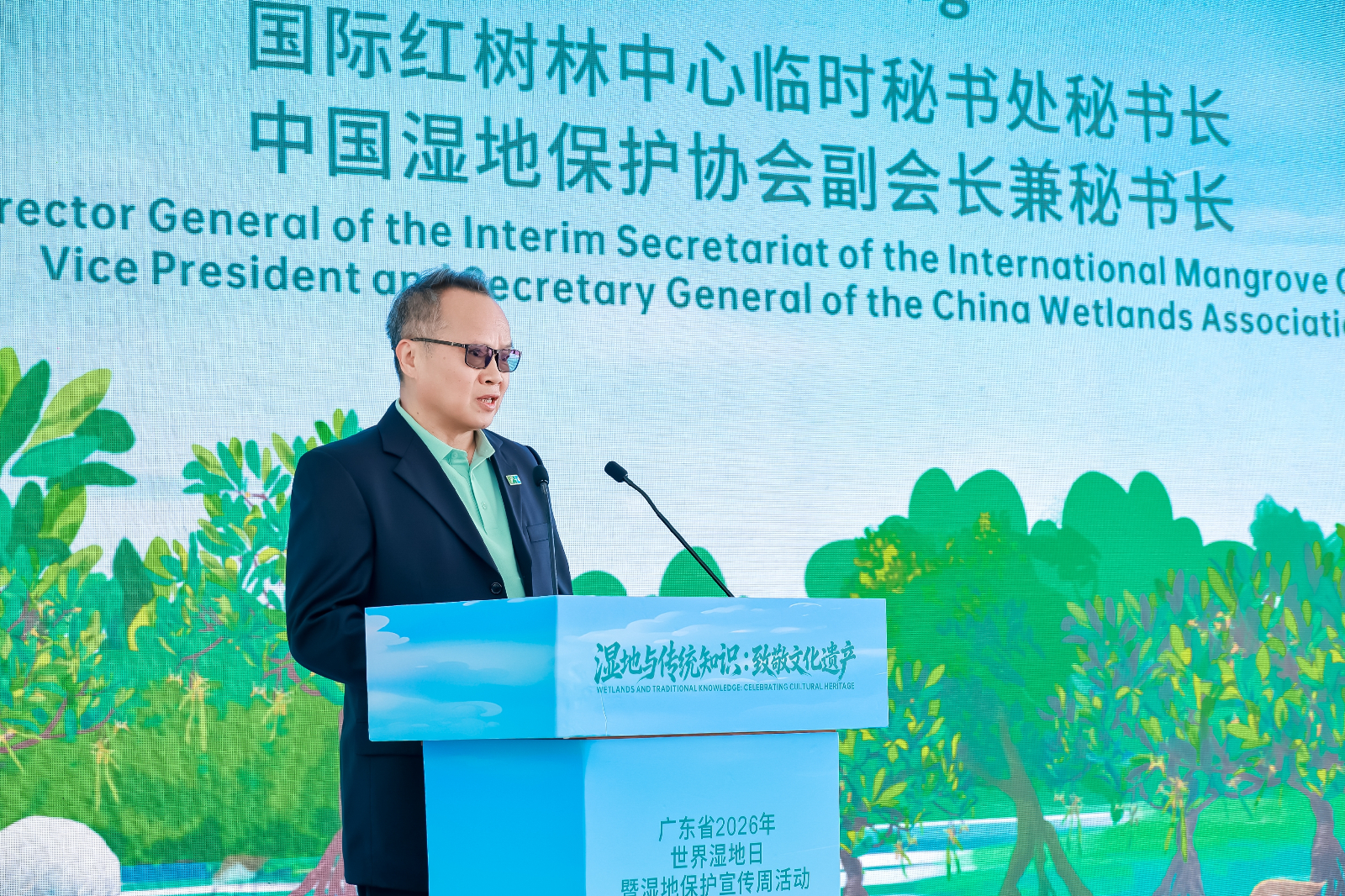
Prof. Bao Daming, Director General of the Interim Secretariat of the IMC, noted that 2026’s World Wetlands Day theme underscores that effective wetland conservation relies not only on scientific research and institutional governance, but also on the knowledge, experience and cultural traditions accumulated through long-term community practices. By effectively integrating traditional wisdom with modern science, wetland conservation efforts can better align with local ecological conditions and foster broader public participation and support.
He further emphasized that mangroves are among the world’s most important ecosystems, playing an irreplaceable role in disaster risk reduction, biodiversity conservation and climate change mitigation, while also supporting the livelihoods of coastal communities. As the world’s first intergovernmental organization dedicated to mangroves under the framework of the Convention on Wetlands, the IMC is actively building a global platform for cooperation on mangrove conservation and restoration, promoting knowledge sharing, technical exchange and capacity-building, and supporting countries in fulfilling their obligations under the Ramsar Convention and other relevant international environmental agreements.
During the event, Shenzhen released the Methodology for Mangrove Conservation (V1.0), with a focus on climate change mitigation and biodiversity conservation. The methodology provides a scientific basis for quantifying the ecological value of mangroves and facilitating international exchange. A documentary titled “A Mangrove Forest by the Sea,” jointly produced by China Media Group and the Urban Planning and Natural Resources Bureau of Shenzhen Municipality, also premiered, vividly portraying the ecological beauty of mangroves and the stories behind their conservation.
Looking ahead, the IMC will continue to engage governments, wetland practitioners, educators and young people worldwide, promoting the combined application of traditional knowledge, scientific research and public action. By advancing wetland and mangrove conservation from awareness-raising to broad participation and collective action, the IMC aims to contribute meaningfully to safeguarding global wetland ecological security, enhancing climate resilience and advancing sustainable development.