

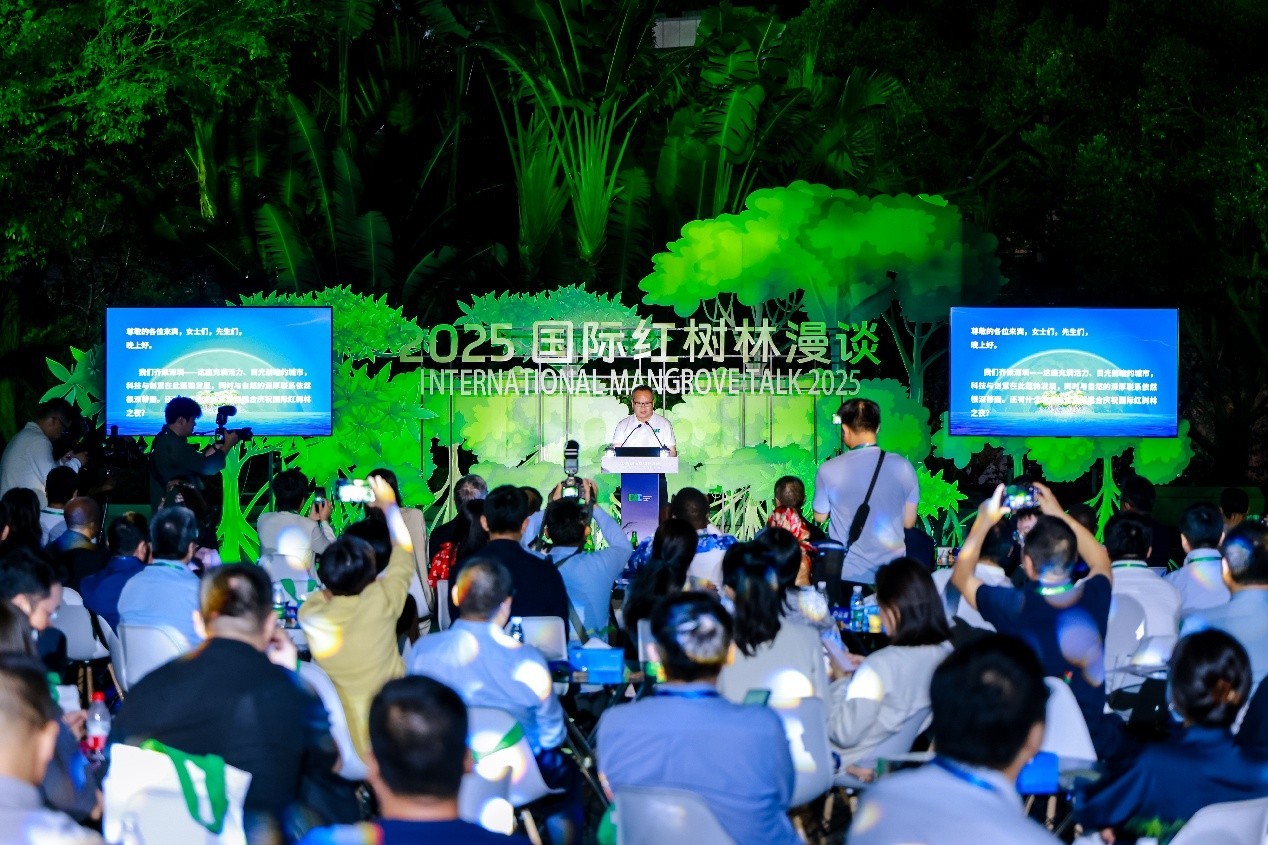
The sixth of November marked the first anniversary of the signing of the Establishment Agreement of the International Mangrove Center (IMC). To celebrate the occasion, International Mangrove Night 2025 was held at the Shenzhen International Garden and Flower Expo Park under the theme “Beauty in Diversity.” The event highlighted international cooperation in protecting and managing coastal ecosystems.
The anniversary was jointly organized by the IMC, the Urban Planning and Natural Resources Bureau of Shenzhen Municipality, the Foreign Affairs Office of the Shenzhen Municipal People’s Government, the Culture, Radio, Television, Tourism and Sports Bureau, the Urban Management and Law Enforcement Bureau and the People’s Government of Futian District.
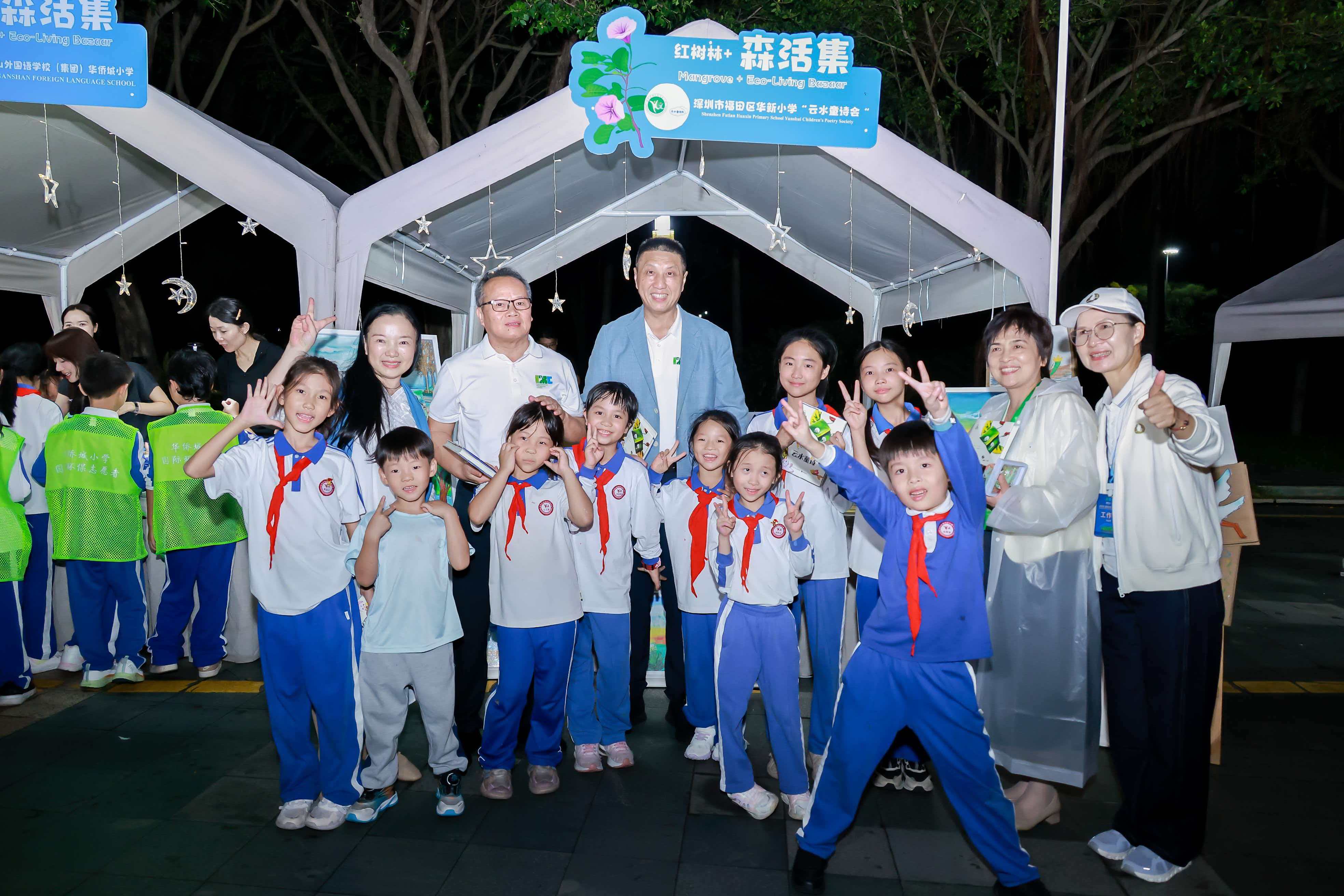
Focusing on ecology, technology and culture, the programme featured five exhibition zones showcasing innovative technologies, local initiatives, international partnerships and immersive art experiences. The aim was to connect mangrove conservation with the daily lives of citizens through interactive and hands-on activities.
As part of the celebration, International Mangrove Talk 2025 took place at the Garden Expo Park under the theme “Implementing the ‘Mangrove+’ Initiative to Build a Shared Future for All Life on Earth.” The forum gathered government officials, researchers, business representatives and civil society participants from more than 20 countries to exchange experiences and ideas on mangrove conservation and sustainable development.
In his opening remarks, Prof Bao Daming, Director General of the IMC Interim Secretariat, described mangroves as “silent guardians of the coastline” that play an essential role in addressing climate change, maintaining biodiversity and supporting coastal livelihoods. Since its establishment in November 2024, the IMC has grown to include 20 signatory countries, serving as a hub for global collaboration on mangrove protection. Prof Bao noted that the IMC’s “Mangrove+” concept brings together conservation, technology, education, cultural exchange and international partnership.
In his address, Mr Xu Songming, Director General of the Urban Planning and Natural Resources Bureau of Shenzhen Municipality, stated that Shenzhen deeply values the global platform provided by the IMC. The city will actively share its story of harmonious coexistence between mangroves and urban development, expand its international network of partnerships, and launch the “Shenzhen Urban Index (SUI)” to contribute Shenzhen's insights and solutions to global ecological governance and urban development.
Keynote speakers explored different aspects of the “Mangrove+” approach:
Mr Lai Chun-chi, Deputy Director of Hong Kong’s Agriculture, Fisheries and Conservation Department, spoke about mangrove management and cooperation in Hong Kong, drawing on the experience of the Mai Po Nature Reserve and its ecological links with Shenzhen.
Prof Lin Guanghui of Tsinghua University discussed “Mangrove Blue Carbon and Climate Change Response,” highlighting the role of mangroves in carbon storage, climate mitigation and global cooperation. He emphasized Shenzhen’s position as a bridge for sharing China’s experience while learning from international practice.
Mr Shan Liang, Director of the Urban Planning and Land Development Research Center of Shenzhen Municipality, presented “Beauty in Diversity, ‘Mangrove+’: Empowering High-Quality Urban Development through Ecological Collaboration,” outlining Shenzhen’s approach to integrating urban growth and ecological protection.
International Mangrove Talk 2025 forms part of Shenzhen’s broader efforts to advance the “Mangrove+” action plan and strengthen the IMC’s operations through open and collaborative approaches.
Discussions covered topics such as mangrove restoration standards, blue carbon mechanisms and cross-border ecological corridors, helping move international cooperation on mangrove conservation from dialogue to practice.
Since it was founded, the IMC has expanded from 18 to 20 member countries, reflecting growing global engagement in protecting mangroves and supporting sustainable development in coastal regions.