

On May 29, 2025, the Interim Secretariat of the International Mangrove Center (IMC) visited the Secretariat of the Asia-Pacific Space Cooperation Organization (APSCO) for an exchange and discussion. Both sides engaged in in-depth conversations on strengthening inter-institutional collaboration and exploring potential cooperative opportunities.
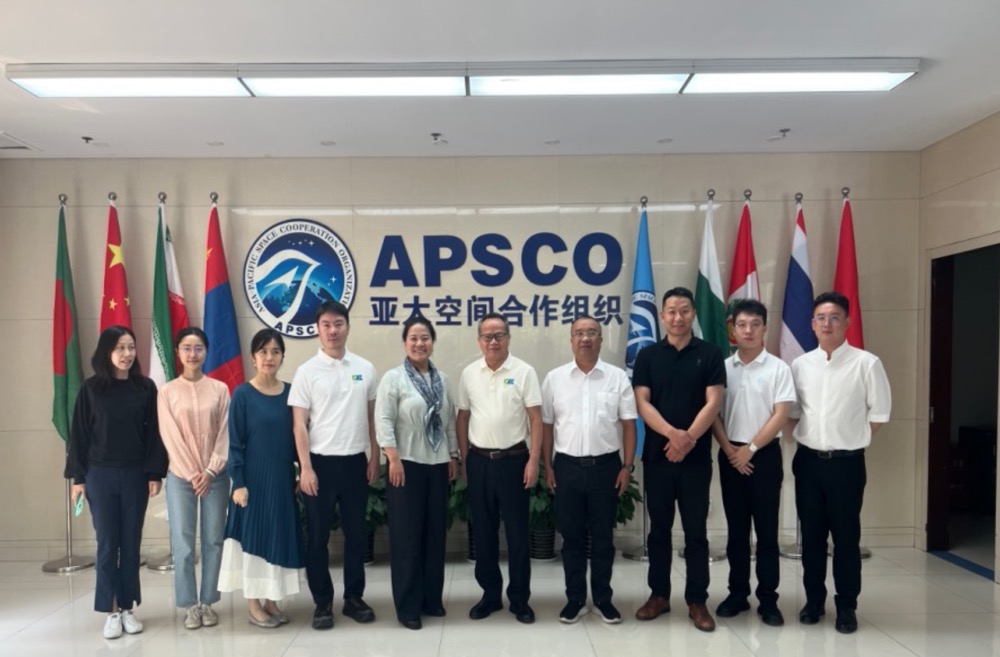 Group photo of the IMC Interim Secretariat delegation during their visit to APSCO.
Mr. Jiang Hui, Secretary-General of APSCO, welcomed Prof. Bao Daming, Director General of the IMC Interim Secretariat, and his delegation. He introduced APSCO’s history and mission, with a special focus on sharing applications of remote sensing technology in mangrove monitoring. He emphasized that APSCO, as an intergovernmental international organization headquartered in China, has been committed since its establishment in 2008 to promoting multilateral cooperation in space technology across the Asia-Pacific region. Through technical support, talent cultivation, and technology transfer, APSCO continues to enhance regional space capabilities and technological innovation.
Director General Bao Daming provided an overview of the IMC’s establishment background, development, mission, and current key initiatives. He highlighted that the IMC is currently focused on critical tasks such as its operation in China and preparations for the first council meeting. As the world’s first intergovernmental organization dedicated to the conservation, restoration, and wise and sustainable use of mangroves, the IMC aims to work with member states to explore global models for mangrove conservation and restoration, promote best practices worldwide, and contribute to achieving the United Nations’ 2030 Sustainable Development Goals.
This exchange laid a solid foundation for future collaboration between the two organizations. As intergovernmental international organizations headquartered in China, both shares aligned philosophies and complementary strengths in advancing multilateral cooperation and capacity building. Moving forward, the two sides may deepen cooperation in areas such as remote sensing monitoring, ecological information sharing, and professional training, exploring innovative applications of space technology in mangrove conservation and regional ecological governance. Together, they will contribute to ecological civilization and global sustainable development.